
How Roof Rejuvenation Helps Restore Aging Roofs
Dry, faded shingles don't always mean a new roof. Sometimes they just need their oils back.
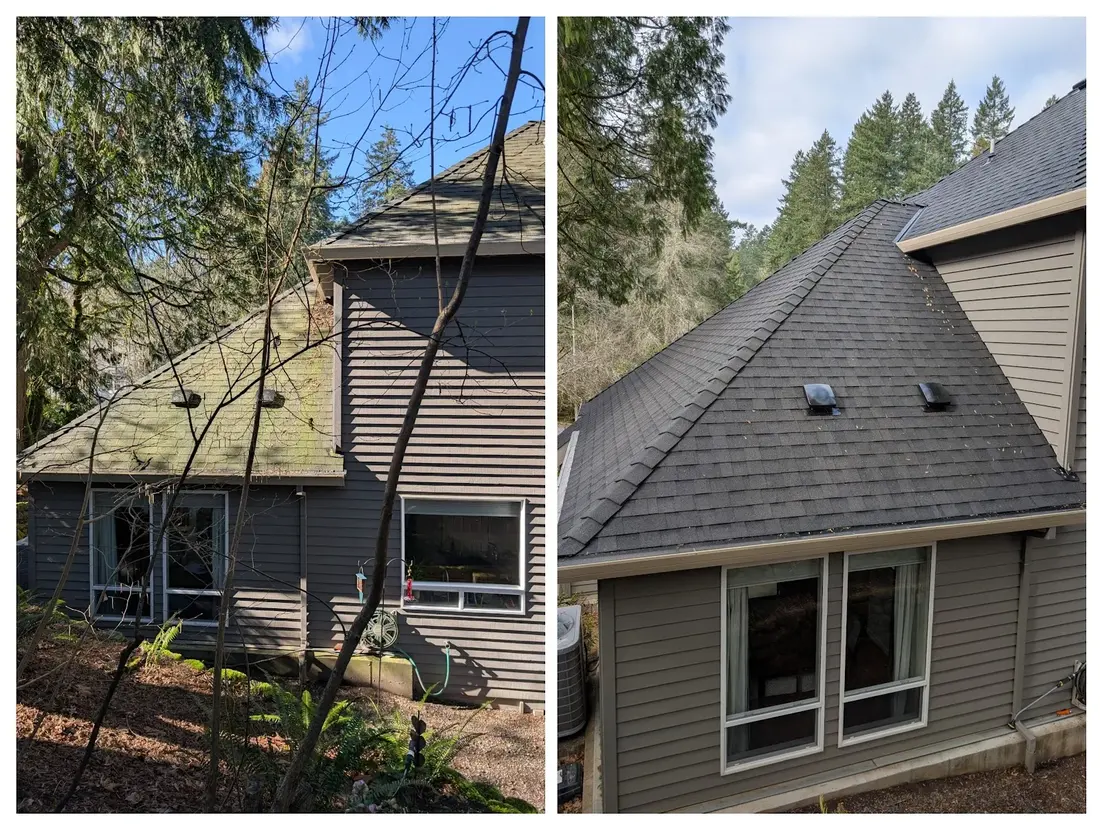
Check your gutters after the next storm. If black grit is collecting at the downspouts, your shingles are shedding their armor. Those granules protect the asphalt underneath, and dry, aging shingles drop them with every rain.
You may not need a new roof. Our asphalt roof rejuvenation service feeds tired shingles the oils they've lost so they flex instead of crack. Call 360-803-3900 for a free roof evaluation and a straight answer.
What Rejuvenation Does for Asphalt Shingles
Asphalt shingles are born flexible. Sun and weather slowly pull the oils out of them. That's when they turn brittle and start shedding granules. Rejuvenation soaks the shingles with a plant-based conditioner that puts flexibility back and helps the granules stay put.
- Rain beads up and runs off instead of soaking in
- Granules stay attached, guarding against UV wear
- Color evens out for a better look from the street
- Less curling and cracking as the shingles age
Think of a stiff old work glove. Rub conditioner into the leather and it bends again without splitting. Same idea, applied to your roof.
Is Your Roof a Good Candidate?
Rejuvenation is for roofs that are aging but still sound. We inspect before we recommend anything. A good candidate looks like this:
- Shingles lie mostly flat, with only light curling at the edges
- Granules are still present, with normal wear at the downspouts
- No soft spots in the deck and no repeat leaks inside
- Flashing is solid around chimneys, skylights and vents
- Any moss is surface-level and can be cleaned off first
If whole slopes have lost their granules, or the roof sags, a treatment won't save it. We'll tell you that to your face and point you toward a replacement conversation instead. You should only pay for what actually helps.
Why Vancouver Roofs Age Faster
In neighborhoods like Felida, Salmon Creek, Hazel Dell and Cascade Park, tall evergreens and north-facing slopes keep roofs damp for weeks. Damp plus shade is a welcome mat for moss and algae. A cold snap after a storm makes it worse by expanding the trapped water right at the shingle edges.
Wind along the Columbia pushes fir needles into roof valleys, where they sit and hold water. That's why homes near greenbelts age faster than homes on open, sunny streets. It's also why we handle moss removal before any treatment goes on.
How We Prep and Apply the Treatment
The spray is the easy part. First we protect your landscaping, clean the roof with gentle, roof-safe methods, and make sure the surface can absorb the conditioner evenly. Then we apply a measured coat across the field shingles and detail the ridges, valleys and flashing.
Weather matters here. Vancouver mornings start damp even in July, so we watch the forecast and work in dry windows, often later in the day. The roof needs time to drink in the treatment before the next shower.
Cleaning, Rejuvenation or Replacement?
Each one has a different job. Cleaning removes moss and grime. Rejuvenation conditions the shingle itself. Replacement resets everything when the roof is too far gone. If you're weighing the last two, our guide on rejuvenation vs. full replacement lays it out in plain language.
Many homeowners do a gentle cleaning first, then condition the shingles the same season. Our Fresh Roof treatment carries a written six-year warranty, so the work is backed by paperwork, not promises.
What to Expect After
Most homeowners notice richer, more even color within days. In the next rain, water should bead and move off the roof faster. Over time you'll see fewer loose granules in the gutters after storms. Heavily weathered spots can take a little longer to even out, and that's normal.
Two honest notes. Rejuvenation is not a leak patch, and it won't fix damaged wood or failed flashing. And the products we use are designed to be safe around plants and pets when applied correctly. We cover sensitive areas and control the runoff.
Wondering if Your Roof Qualifies?
One free evaluation tells you. If a treatment fits, we'll say so. If it doesn't, we'll say that too.