
Why Roof Moss Removal Matters for Long-Term Roof Health
Moss looks harmless from the ground. Up close it's lifting shingles and holding water against your roof.
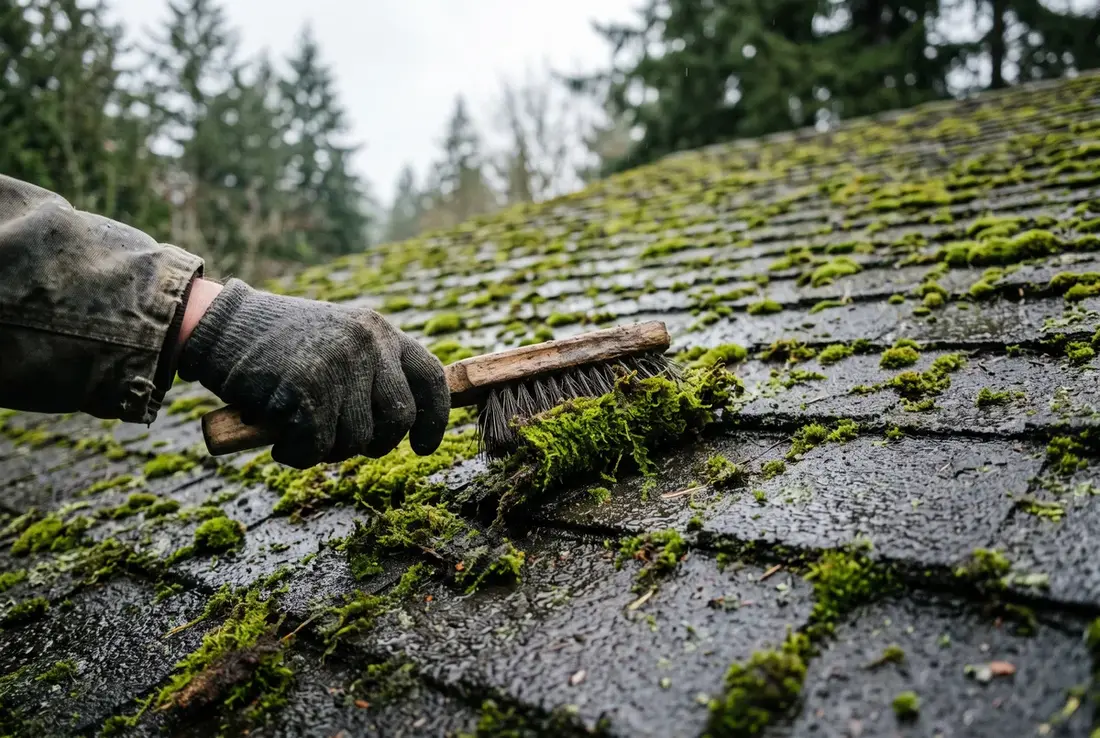
Moss on a roof works like a wet towel nobody ever picks up. It presses water against your shingles for months, and around here the wet season gives it plenty to work with.
If you're seeing green patches or dark streaks up there, roof moss removal is the next smart step. Call 360-803-3900 and we'll take a look before the next storm gets here.
What Moss Does to a Roof
Moss looks soft, but it isn't gentle. Its roots grip the shingle surface, lift the edges, and hold water against the roof. Give it a few seasons and the damage stacks up:
- Granule loss that thins the shingles' protective top layer
- Lifted edges that let wind and rain work under the roofing
- Valleys that dry slowly, which is where leaks like to start
- Clogged gutters and downspouts pushing water at the fascia
- Stains that bake in during sunny breaks between storms
Why Vancouver Grows So Much of It
Our climate is mild, wet and shaded for most of the year. In Felida, Salmon Creek, Hazel Dell, Cascade Park and Fisher's Landing East, tall evergreens and north-facing slopes keep roofs damp after every storm. Needles pile up around vents, skylights and dormers and feed the growth.
Winter adds one more trick. We don't get deep freezes often, but a cold snap after a rainy stretch expands the trapped water sitting at your shingle edges. Over time that cycle lifts shingles and opens up weak points.
Red Flags You Can Spot From the Sidewalk
Your roof usually talks before it fails. After the next storm, take a slow walk past the house and look for:
- Green patches along shaded edges or near the ridge
- Dark streaks that hang around even on sunny afternoons
- Shingles lifting or curling where moss has taken hold
- Granules collecting at the downspouts
- Valleys that stay damp or hold needles for days
One of these is a nudge. Two or more is a phone call. Catching growth while it's light is easier on your shingles and on your wallet.
How Safe Removal Works
Rule one: never put high pressure on shingles. It strips granules and opens seams, which trades one problem for a worse one. We remove moss with low-pressure, roof-safe solutions and careful rinsing, then treat the leftover spores so the roof can dry out properly.
A full job also clears the valleys and includes gutter cleaning so runoff actually leaves the house. And please don't walk a wet roof yourself. It's slick, it's steep, and it's not worth it.
Moss and Your Insurance Paperwork
Moss isn't only a roof problem anymore. Some insurers flag heavy growth at renewal because it reads as deferred maintenance. A professional cleaning gives you before-and-after photos and a dated invoice, which is exactly the paper trail they want to see. We wrote a full guide on moss and insurance in Vancouver if a letter has already landed in your mailbox.
Coverage aside, a moss-free roof simply drains better. Open valleys and clear gutters move our biggest storms off the house instead of letting water creep under shingles.
After the Moss Is Gone
A clean roof is the starting line. Older shingles often benefit from roof rejuvenation next. It conditions the aging asphalt so it stays flexible and holds granules better, which sets the roof up to shed water through the long rainy stretches. Many homeowners also refresh their siding afterward with house soft washing, since streaks that washed off the roof can end up down there.
Timing tip: plan roof cleaning before the fall rains settle in. Shaded homes in Salmon Creek or Orchards usually need care more often. Sunnier lots in parts of Cascade Park can stretch the interval. Either way, your roof heads into winter clean and dry, with photos for your records.
Give Your Roof a Clean Slate
Free estimate, roof-safe methods, photos for your records. Call the Dawg before the moss digs in deeper.